
Sweden Considers Giving More Authorities Power Against Hostile Drones
The government wants to strengthen civil defence by allowing more civilian actors to detect, disrupt, and possibly shoot down threatening drones.
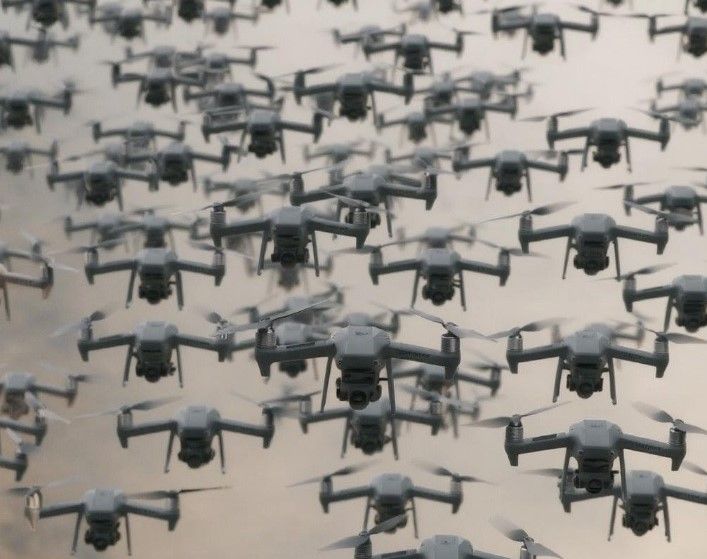
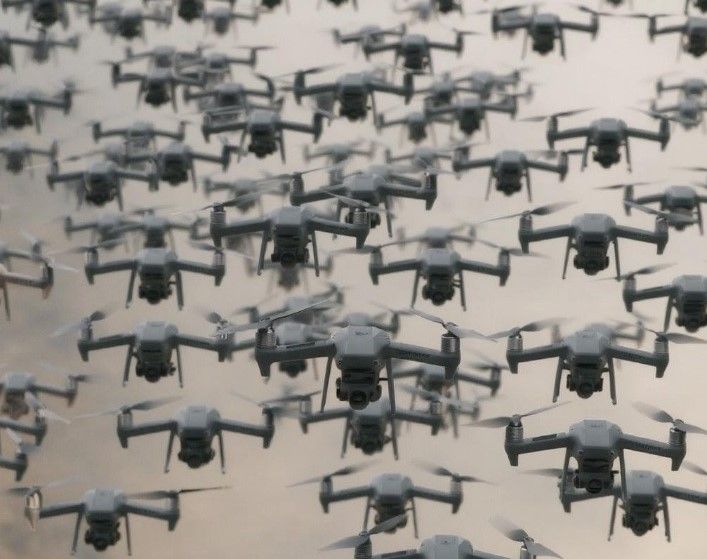
Sweden is preparing to review how civilian authorities should respond when hostile (fientliga) drones threaten important parts of society. The government wants to examine whether more public bodies, not only the police and the military, should be able to act when an unmanned aircraft appears above sensitive areas. The question has become increasingly urgent as drones are no longer seen only as tools for photography, delivery, or technical innovation. They can also be used for spying, disruption, and attacks against vital services.
The new inquiry will focus on drones within Sweden’s civil defence (civilt försvar), meaning the part of national preparedness that keeps society functioning during crisis or war. Civil defence includes services such as rescue operations, hospitals, transport networks, food supply, communications, and energy systems. These sectors may benefit from drones, for example during fires, accidents, floods, or difficult rescue missions. At the same time, they also need protection from drones that may be used for sabotage, surveillance, or intelligence gathering.
According to the government, the investigation will examine which civilian actors should receive the authority to intervene (ingripa) against dangerous drones. This could mean several different things. In the most serious cases, an authority might need the right to shoot down a drone. In other situations, it could be safer to disturb its signal, force it to land, block its navigation, or identify the operator. The issue is not only technical, but also legal and political, because any intervention in the airspace must be controlled, proportionate, and clearly regulated.
Carl Oskar Bohlin, Sweden’s Minister for Civil Defence, has said that the government wants to look at whether more actors should be given this kind of mandate (mandat). At present, the police already have powers to intervene against certain drones, while the defence sector has its own role in military contexts. The possible change would concern civilian authorities that protect critical infrastructure or carry out essential public services. The goal is not to create confusion, but to make sure the right actor can respond quickly when a threat appears.
One reason this issue is difficult is that drones can be both useful and dangerous at the same time. A drone used by emergency services can help locate a missing person, inspect a damaged bridge, or survey a burning industrial site without putting people at risk. However, the same type of technology can also be misused for surveillance (övervakning) of a power plant, a harbour, a hospital, or a government facility. Because drones are relatively cheap and easy to obtain, even small devices can create large security problems.
The government’s inquiry will also study technical countermeasures (motåtgärder) against threatening drones. These may include detection systems that identify drones before they reach a protected area, electronic equipment that disrupts communication between the drone and its operator, or physical systems that stop the drone in the air. These tools must be carefully chosen, because using them in a civilian environment can create risks. A falling drone may injure people, interfere with other equipment, or damage property if the response is not handled correctly.
Electronic defence is especially important because many drones depend on radio signals, satellite navigation, and remote control links. Devices known as jammers (störsändare) can interfere with these signals and prevent a drone from continuing its mission. However, jamming is sensitive because it can also affect other communication systems nearby. That is why the government wants the inquiry to analyse how such tools should be used, who should be allowed to use them, and what safeguards should be required before they are deployed.
Another possible method is the use of interceptors (avfångare), systems designed to stop or capture drones before they reach their target. Some systems use nets, projectiles, or other drones, while others rely on more advanced weapons. These methods may be useful around airports, military sites, energy facilities, or major public events. But they also raise practical questions. Authorities must know when a drone is truly dangerous, how to avoid harming civilians, and how to preserve evidence after an incident.
The inquiry will therefore need to address legislation (lagstiftning) as much as technology. Clear laws are needed so that authorities understand their responsibilities before a crisis happens. If too few actors have permission to act, Sweden may lose valuable time during a drone incident. If too many actors are given unclear powers, the response could become disorganised. A strong legal framework would define who can detect drones, who can order an intervention, what methods may be used, and how accountability should be handled afterward.
The review is also connected to Sweden’s wider effort to strengthen resilience (motståndskraft) in a more uncertain security environment. Since Russia’s full scale invasion of Ukraine, European countries have paid closer attention to hybrid threats, including cyberattacks, sabotage, disinformation, and drone activity. Sweden has repeatedly emphasised that civil defence must be able to support military defence and keep basic functions running. Protecting electricity, healthcare, communications, transport, and water supply has become part of national security, not just ordinary public administration.
Drones have played a major role in the war in Ukraine, where they are used for reconnaissance, targeting, attacks, and battlefield coordination. This has changed how many European governments think about defence. Small aircraft that once looked like consumer gadgets can now carry cameras, explosives, or sensors. They can also test a country’s reaction time and expose vulnerabilities (sårbarheter) in airports, ports, energy networks, and emergency planning. For Sweden, the lesson is that drone defence must be prepared before a serious incident occurs.
Sweden has already invested heavily in military anti drone capability. In 2025, the government announced more than SEK 5 billion to strengthen anti drone systems and Gripen fighter aircraft capabilities. More than SEK 3.5 billion of that amount was directed toward anti drone equipment, including sensors, warning devices, electronic systems, and weapons. The new civilian inquiry can be seen as a parallel step. Military forces may protect Sweden against armed attack, but civilian society also needs tools to protect everyday functions from hostile interference.
A central issue will be coordination (samordning) between different authorities. A drone over a prison, an airport, a hospital, or an energy facility may involve several organisations at once. Police, security services, municipal rescue services, transport authorities, and infrastructure operators may all need information. If responsibilities are unclear, valuable minutes can be lost. The inquiry will likely need to consider how information should flow, who leads an operation, and how local authorities should cooperate with national agencies during an urgent incident.
The government also wants drones to be used more effectively by civilian actors themselves. This means the inquiry is not only about stopping drones, but also about enabling safe and useful public drone operations. Rescue services may use drones to assess dangerous areas after explosions or fires. Healthcare authorities may use them in future logistics. Energy companies may inspect power lines, dams, or heating systems. Transport authorities may monitor roads, railways, or ports. In each case, rules must balance innovation with safety and privacy.
Privacy will remain an important concern. Drones can collect images, video, heat signatures, and other data from the air. When public authorities use them, citizens need to know that data collection is limited, justified, and protected. When hostile actors use them, authorities need tools to stop them. This creates a difficult balance between security and civil liberties. The inquiry must therefore consider proportionality (proportionalitet), meaning that any response should be strong enough to handle the threat but not more intrusive than necessary.
The timing of the inquiry shows that Sweden sees the drone issue as part of long term preparedness. The assignment is due to be reported in October 2027, which gives the investigator time to analyse legal, technical, and organisational questions. The government has appointed former Air Force Chief Mats Helgesson as special investigator, a choice that signals the seriousness of the subject. His background may help connect military experience with the needs of civilian authorities and public services.
If the inquiry leads to new rules, Sweden could eventually give selected civilian actors greater powers to detect, disrupt, or physically stop hostile drones. But the final outcome is not yet decided. The government first wants proposals on which organisations should receive these powers, what equipment they may use, and what legal changes are necessary. The result may shape how Sweden protects critical infrastructure for years to come.
The broader message is clear. Drones are now part of both modern society and modern conflict. They can help save lives, inspect infrastructure, and support emergency services, but they can also threaten the same systems they were designed to assist. Sweden’s challenge is to build a framework that allows useful drone technology to develop while making sure hostile drones can be detected and stopped before they cause damage.
Key Swedish Vocabulary
fientliga hostile
civilt försvar civil defence
ingripa intervene
mandat mandate
övervakning surveillance
motåtgärder countermeasures
störsändare jammers
avfångare interceptors
lagstiftning legislation
motståndskraft resilience
sårbarheter vulnerabilities
samordning coordination
proportionalitet proportionality
For requests or suggestions: pr@learnsvenska.org
Learn the official language of Sweden in 30 days thanks to the most complete Grammar, Vocabulary and Culture courses available. Start speaking Swedish today!

Land of the Midnight Sun

© 2026 All rights reserved
